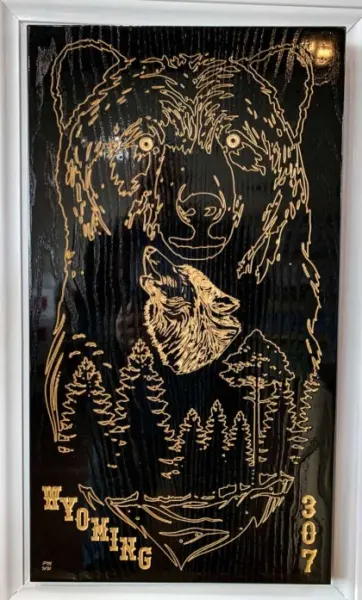
Precision in woodworking used to depend entirely on the steadiness of a hand and years of practiced skill. That skill still matters, but modern tools have changed what is possible on top of it. Laser engraving wood and CNC carving give PM Woodworks a level of accuracy that complements, rather than replaces, traditional technique.
What Precision Actually Means in Custom Woodwork
Precision is not just about a piece looking neat. It affects whether a cabinet door sits flush, whether text on a sign is perfectly legible, and whether a repeated design element lines up exactly across a project. Small inconsistencies add up, especially on detailed or large-scale work.
How CNC Carving Adds Precision
CNC carving follows a digital design with mechanical accuracy, cutting and shaping wood the same way every time. This matters most on projects where repeatability counts, like matching cabinet door panels, or where a design calls for deep, dimensional detail that would be difficult to replicate consistently by hand across multiple pieces.
How Laser Engraving Adds Precision
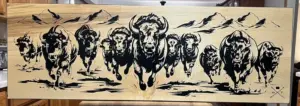
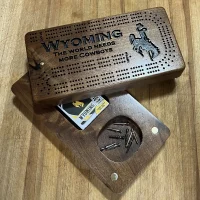
Laser engraving brings a different kind of accuracy, well suited to fine lines, detailed text, and intricate imagery. Because a laser follows an exact digital path, even very small text stays crisp and legible, which is difficult to achieve consistently with hand tools alone.
Where This Combination Shows Up
Custom Wood Signs
Text-heavy or image-heavy signs benefit from the fine detail laser engraving provides, while larger lettering meant to be read from a distance often calls for CNC carving’s dimensional depth.
Cabinetry and Hutches
Precise, repeatable cuts help ensure doors, panels, and detail work align consistently across a full cabinetry project.
Custom Woodworking Projects
Furniture and other one-of-a-kind pieces can incorporate carved or engraved detail with a level of consistency that supports the overall design.
Technology Alone Is Not the Whole Story
PM Woodworks combines CNC and laser technology with traditional craftsmanship, and that pairing is the actual source of precision in a finished piece. The technology executes a design accurately, but selecting the right hardwood, planning the joinery, and finishing the piece by hand all still depend on experience. The owner’s more than 30 years of hands-on woodworking experience, paired with a self-described perfectionist streak, shapes how that technology gets used on every project.
Why Precision Matters to the Finished Product
- Consistent, professional results across multi-piece projects like cabinetry
- Cleaner, more legible detail on signs and engraved gifts
- Design elements that repeat accurately across a larger project
- A finished piece that reflects careful planning, not guesswork
Precision as a Foundation, Not a Finish Line
It is worth being direct about what precision technology can and cannot do. A CNC machine can execute a design exactly as programmed, but it cannot decide that a particular board has an unstable grain and should be set aside, or judge whether a finish coat has cured evenly. Those judgment calls still rest entirely with the person running the shop. Precision tools raise the ceiling on what is achievable, but the craftsmanship underneath still determines the floor.
How This Affects Multi-Piece Projects
Projects involving several matching pieces, a full set of cabinet doors, a coordinated ranch sign package, or a series of engraved gift boards, benefit most from CNC and laser precision, since consistency across multiple pieces is difficult to achieve reliably by hand alone. Single, standalone pieces still benefit from the technology, but the advantage is most visible when comparing several pieces side by side.
Precision and the Client Conversation
One underrated benefit of CNC and laser technology is what it does for the design conversation before any wood is cut. Because designs are set up digitally before the machine executes them, it becomes easier to review layout, spacing, and proportions with a customer ahead of time, reducing the guesswork that came with purely hand-drawn layouts in the past. That does not replace the conversation about wood, finish, or overall concept, but it adds a helpful layer of clarity to the process.
A Modern Tool in a Traditional Shop
PM Woodworks is built on decades of hands-on woodworking experience, and CNC and laser technology were added to extend that skill rather than replace it. The result is custom work that is both precisely built and genuinely handcrafted, from material selection through the final finish.
See examples of precision detail work on the Custom Woodworking page.
Precision Serves the Design, Not the Other Way Around
It is worth remembering that precision technology exists to serve a design idea, not to dictate one. A customer’s vision for a sign, a cabinet detail, or a piece of furniture comes first. CNC carving and laser engraving are simply the tools PM Woodworks reaches for when that vision calls for a level of exact, repeatable detail that would be difficult or impractical to achieve by hand alone. The starting point is always your idea, not the machine’s capability.
Discuss Your Project's Detail Work
Whether you need fine engraved text or deep carved lettering, PM Woodworks can help determine the right approach. Call (307) 262-3679 or visit Contact Us.
Frequently Asked Questions
No. PM Woodworks combines this technology with traditional craftsmanship. The technology handles precise cutting and engraving, while material selection, joinery, and finishing remain hands-on.
Precision affects whether doors and panels sit flush and align consistently across a full project, which impacts both appearance and long-term function.
Yes. Laser engraving and CNC carving can be incorporated into custom furniture and other woodworking projects, not only signage.