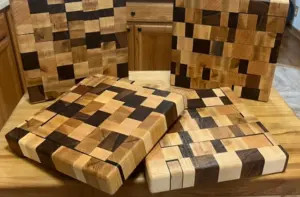
Not every board sold as a charcuterie board is built to actually be used as one. Thin, cheaply finished boards crack, warp, or dull knives faster than they should. Understanding what makes the best wood for charcuterie boards helps explain why a handcrafted hardwood board from PM Woodworks holds up so differently from something picked up at a big-box store.
Why Wood Choice Matters for a Cutting Surface
A charcuterie board is not just decoration, it gets used, wiped down, and set out again and again. The wood needs to stand up to knife contact, resist absorbing moisture from cheese and meat, and hold its shape over time without cracking or splitting. That is a different set of demands than furniture wood, even though both start from the same hardwood.
What Makes Hardwood the Right Choice
PM Woodworks builds every charcuterie board from premium, locally-purchased hardwood. Hardwood is denser and more durable than softer woods, which means it resists surface damage from knives and holds a smoother finish over repeated use. It also tends to have a tighter grain, which matters for both appearance and how well the board resists moisture.
What Sets a Handcrafted Board Apart
- Wood selected for grain, density, and durability, not just appearance
- Boards built and finished by hand rather than mass-produced
- A finished product meant to be used, not just displayed
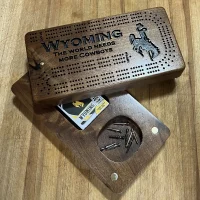
- The option to personalize a board with engraving, since PM Woodworks combines CNC and laser technology with traditional craftsmanship
The Perfectionist Standard
PM Woodworks’ owner describes himself as a perfectionist about material selection, and that standard applies directly to charcuterie boards. A board that looks good but was cut from wood with an unstable grain will eventually warp or crack. Choosing the right board means choosing wood that was selected to hold up, not just to photograph well.
Caring for a Hardwood Charcuterie Board
Even the best wood for charcuterie boards benefits from proper care. Hand washing, drying promptly, and occasional oiling all help a hardwood board last for years rather than months. A well-built board and reasonable care go hand in hand.
What to Look For When Comparing Boards
- Grain pattern: a tight, even grain generally holds up better than an open, porous grain
- Thickness: a board with enough thickness resists warping better than a thin, lightweight one
- Finish: a proper food-safe finish protects the wood without leaving a heavy, artificial sheen
- Construction: a single solid piece, or a well-joined multi-piece board, holds together longer than one glued together carelessly
Why Some Boards Warp and Others Don't
Warping usually comes down to two things: the wood itself and how it was dried and finished before being cut into a board. Wood that was not properly dried before being shaped can continue to move and shift as it acclimates to a kitchen environment, especially with repeated exposure to water during washing. Selecting quality hardwood and finishing it properly from the start prevents most of the warping issues that show up in cheaper, mass-produced boards.
Why Locally-Purchased Hardwood Matters
PM Woodworks sources its hardwood locally, which supports the same standard of quality control that goes into every project the shop builds, from cabinetry to signage. It is the same premium hardwood used across the shop’s product lines, brought to a charcuterie board with the same attention to detail.
End Grain vs. Edge Grain Boards
Hardwood boards are generally built one of two ways. Edge grain boards are made by gluing strips of wood together with the long edges facing up, producing a classic striped look and a durable, everyday cutting surface. End grain boards are built with the wood fibers facing upward, which can be gentler on knife edges but requires more careful construction to hold together well. Both approaches rely on quality hardwood and sound joinery to perform properly over time, and the right choice often comes down to how the board will primarily be used, serving versus heavy daily cutting.
Single-Species vs. Mixed-Wood Boards
Some boards are built entirely from one hardwood species, letting a single, consistent grain pattern carry the design. Others combine two or more species for visual contrast. Both are valid approaches, and the choice is largely a matter of personal taste rather than one being inherently sturdier than the other, as long as compatible woods are paired thoughtfully.
A Board Built to Be a Gift or a Keepsake
A handcrafted hardwood charcuterie board makes a practical, personal gift, and one that can be engraved for a wedding, housewarming, or holiday gift. Because every project at PM Woodworks is fully custom, a board can be sized, shaped, and engraved to fit the occasion.
See finished charcuterie board examples on the Charcuterie Boards page.
Questions to Ask Before You Buy a Board
- What hardwood species is the board made from?
- Is it a single solid piece, or built from joined strips of wood?
- What finish was used, and is it food-safe?
- Can the board be personalized with engraving?
A shop that can answer these questions clearly and specifically, rather than with a generic response, is generally a good sign that the board was built with care rather than mass-produced. PM Woodworks can speak directly to the hardwood species, construction, and finish used on every board that leaves the shop, since each one is built and finished individually rather than pulled from a bulk production run.
Order Your Handcrafted Charcuterie Board
PM Woodworks builds charcuterie boards from premium hardwood, right here in Casper, Wyoming. Call (307) 262-3679 or visit Contact Us to order or ask about a custom design.
Frequently Asked Questions
Hardwood is denser and more durable than softer wood, which helps a board resist knife damage and moisture absorption while holding its shape over repeated use.
Yes. PM Woodworks combines CNC and laser technology with traditional craftsmanship, so a charcuterie board can be engraved with a name, date, or design.
PM Woodworks uses premium, locally-purchased hardwood for its charcuterie boards, the same standard of material used across its cabinetry, signage, and custom woodworking projects.